Latest
- The Rowan Tree
Poetry has always been my natural creative language. For years, most of my artistic energy went into crafting poems, shaping words on the page and exploring the themes that continue to inspire me: mythology, folklore, spirituality, mystery, and the landscapes of the imagination.

When my son was very young, however, poetry became more difficult. Not because the inspiration disappeared, but because the practical realities of parenting left less space for sustained concentration. There was little time to sit quietly and refine a poem, and even less certainty that I would remember a promising line long enough to write it down.

What I discovered during those years was a simple solution. If a few lines came to me, I would sing them.

The melody helped me remember the words, and gradually a number of songs emerged. Looking back, it makes sense that this happened. Many of the themes I was exploring, particularly Celtic mythology, the tales of the Mabinogion, and more mystical subjects, seemed naturally at home in song.

Yet a dilemma remained. While I had written the lyrics and created the melodies, I do not play any instruments. I could hear these songs in my head, complete with arrangements and different voices, but I had no practical way of bringing them fully into the world.

Recent developments in AI have changed that. Like many artists, I have reservations about the way AI can be used, particularly when it displaces or devalues the work of human creators. At the same time, I have found it can serve as a useful tool when employed thoughtfully and transparently.

For The Rowan Tree, I used AI to create arrangements for songs whose lyrics and melodies are my own. Rather than replacing the creative process, it enabled a part of the process that had previously been inaccessible to me. I was able to shape the arrangements, experiment with styles, and choose voices that matched how I had always imagined the songs being sung.

The result is a collection of songs that began many years ago as fragments of poetry carried in memory through melody. Now, at last, they have found a fuller form.

The Rowan Tree is a symbol of protection, enchantment, and connection to old stories. It seemed a fitting title for this collection.

I am delighted to finally share The Rowan Tree with you, and I hope you enjoy listening on Soundcloud. - Rooms Without Doors
I’m delighted to announce that my special project chapbook, Rooms Without Doors, has been accepted for publication by Dancing Girl Press & Studio. I’ll share more details in the coming weeks, including a glimpse of the cover artwork. Compared with Saturn Yields to Jupiter, this collection is less lyrical and relational, and more concerned with space, symbolism, and the poem as art object.
- Against the current: Sole authorship as method in contemplative and conceptual scholarship
I'm pleased to share that my article, "Against the current: Sole authorship as method in contemplative and conceptual scholarship", has been published in Accountability in Research.

Drawing on my work on mindful solitude, the article explores sole authorship as an epistemic and ethical methodological condition within contemplative and conceptual scholarship. It argues that in forms of inquiry where interpretation constitutes the primary analytic process, a continuous and traceable authorial perspective can support both epistemic integrity and accountability.

I hope the paper contributes to ongoing conversations about authorship, research integrity, contemplative scholarship, and the development of independent scholarly voice.

Citation:
Kempton, H. (2026). Against the current: Sole authorship as method in contemplative and conceptual scholarship. Accountability in Research: Ethics, Integrity and Policy. https://doi.org/10.1080/08989621.2026.2714974 - Choosing book cover artwork for Saturn Yields to Jupiter
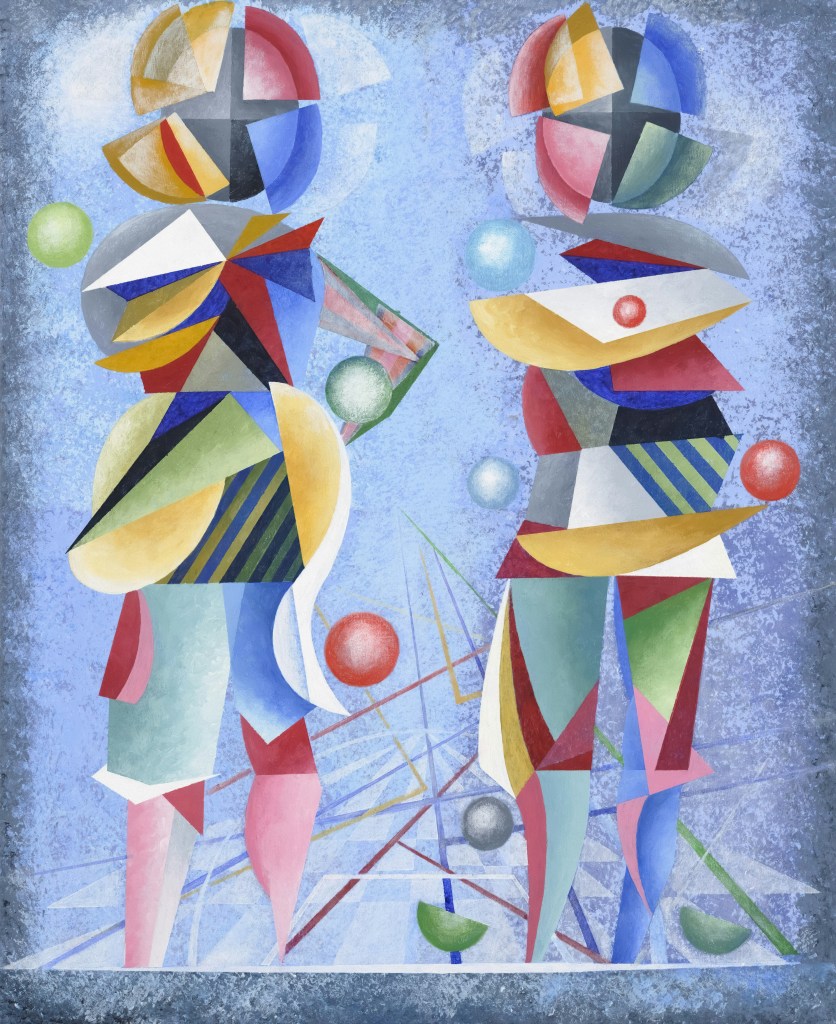
Kelsay recently sent me a selection of possible cover images for Saturn Yields to Jupiter. Choosing a cover is a curious experience. A poetry collection contains many voices, moods, and subjects, yet a single image must somehow stand in for the whole.
Most of the images offered were attractive enough, but they tended towards a quiet contemplative aesthetic. While contemplation certainly appears in the collection, it is only one aspect of it. The poems also contain humour, longing, memory, awkwardness, identity, transformation, and the occasional unexpected encounter with life.
One image immediately caught my attention: an abstract work featuring two stylised figures surrounded by spheres. I was drawn to it because it seemed to echo the title poem without illustrating it too literally. The spheres suggested planets, while the two figures reminded me of the symbolic Saturn and Jupiter that appear throughout the collection—not as astronomical objects, but as different ways of being in the world. The dominant gold and yellow tones also evoke Jupiter’s expansive, life-affirming qualities. The artwork itself is Mäng kaheksa palliga (“Game with Eight Balls”), a 2006 work by Estonian artist Ville Tops, made available through the Tartu Art Museum and Europeana. [unsplash.com]
Saturn represents the grounded, analytical, and disciplined part of myself. Jupiter represents imagination, wonder, creativity, and vision. The collection’s title refers to a reconciliation between those forces rather than a victory of one over the other.
I was also pleased to discover that the image is an artwork rather than an AI-generated image. There is a human hand and artistic vision behind it, yet its abstract nature leaves room for interpretation. Readers may see planets, people, movement, conversation, conflict, harmony, or something entirely different. That openness appeals to me. A poem rarely means just one thing, and perhaps a good cover should work in a similar way.
Whether or not this ultimately becomes the final cover, it was the first image that felt as though it belonged to the world of the book rather than merely decorating it. For a collection called Saturn Yields to Jupiter, that felt like a promising sign.
- Debating the definition of mindfulness
Contributing to the debate on the definition of mindfulness, my article has been published in the journal Mindfulness (title and link below):
- Joining Religions Editorial Board:
I’ve been invited to join the editorial board of the journal Religions. I have been guest editing a special issue on Buddhist meditation and found the work very rewarding, so I’m delighted to take up this editorial board position.
 Heather Kempton